
Cutting Boards for Daily Prep, Not Just Pretty Counters
A practical buying guide focused on fit, maintenance, storage, and the details that decide whether a product keeps earning its place.

Cutting Boards for Daily Prep, Not Just Pretty Counters is the kind of prep tools decision that looks simple until the product is in the kitchen. The difference between a good buy and an annoying one usually shows up in grip comfort, board feel, sharpening, washing, storage, safety, and whether the tool still feels good after twenty minutes of chopping.
This is a buying guide, so the job is not to crown one universal winner. The useful outcome is a shortlist of criteria that helps a reader recognise the right product when they see it. For this page, the useful question is not “what is the most impressive option?” It is “which choice will still make sense after a month of normal use?”
The buying decision
A reader coming to this page is probably trying to avoid buying a block or gadget because it looks complete rather than because each piece earns space. That is the right instinct. Kitchen purchases often go wrong when the decision starts with a product list instead of a use case. Before comparing prices or finishes, it is worth naming the job clearly: what will this item do, how often will it do it, and what will make it irritating to keep using?
For cutting boards for daily prep, not just pretty counters, the practical checks start with blade shape, handle comfort, sharpening options, board material, stability, and how often the tool needs attention. These are not glamorous details, but they are the details that decide whether a product becomes part of the routine. A page that ignores them may look neat, but it leaves the reader to discover the expensive parts after buying.
What separates good from merely expensive
The strongest option is rarely the one with the longest feature list. A smaller, plainer, easier-to-clean product can be the better buy if it solves the real task with less friction. This is especially true in UK kitchens where counter space, cupboard depth, and hard-water maintenance can matter as much as headline performance.
The first filter is fit. If the product is too large, too heavy, awkward to clean, or hard to store, it needs to justify those costs with a clear benefit. If it only offers a marginal upgrade over something already in the kitchen, the more disciplined answer may be to skip it.
The second filter is repeatability. A tool that is easy once but annoying every week is not a good daily purchase. Handles, lids, baskets, cords, seals, blades, and removable parts all become more important after the product has been washed ten times.
How to choose without overbuying
The third filter is honesty about habits. A serious baker, a coffee hobbyist, a family cook, and someone cooking in a small rented flat do not need the same answer. The product that looks best in a studio photograph may be wrong for the person who has to clean it after work.
Where possible, compare products by the failure points. Does it wobble? Does it stain? Does it trap food? Does it need a special cleaner? Does it fit the hob, cupboard, sink, or dishwasher? Does it encourage a useful routine or create another object to manage?
This is also where price needs context. Paying more can be sensible when it buys better construction, easier maintenance, safer handling, or longer useful life. Paying more for size, styling, or bundled extras is harder to justify unless those extras match a real pattern of use.
Who should skip this purchase
A good recommendation should also say who should not buy. In this case, skip the purchase if the tool duplicates something simpler, needs upkeep you will avoid, or adds risk without saving meaningful time. That advice may reduce clicks, but it makes the page more useful.
Category-specific notes
For knives and prep tools, comfort is not decoration. A handle that feels fine for thirty seconds can become annoying through a full tray of onions, herbs, or root vegetables. Balance, grip, and board stability matter more than an impressive-looking block.
Maintenance also changes the recommendation. A knife that needs regular sharpening can be a good buy if the owner will maintain it. If not, a tougher, less glamorous option may serve better. Prep tools should also be judged by how quickly they wash and dry.
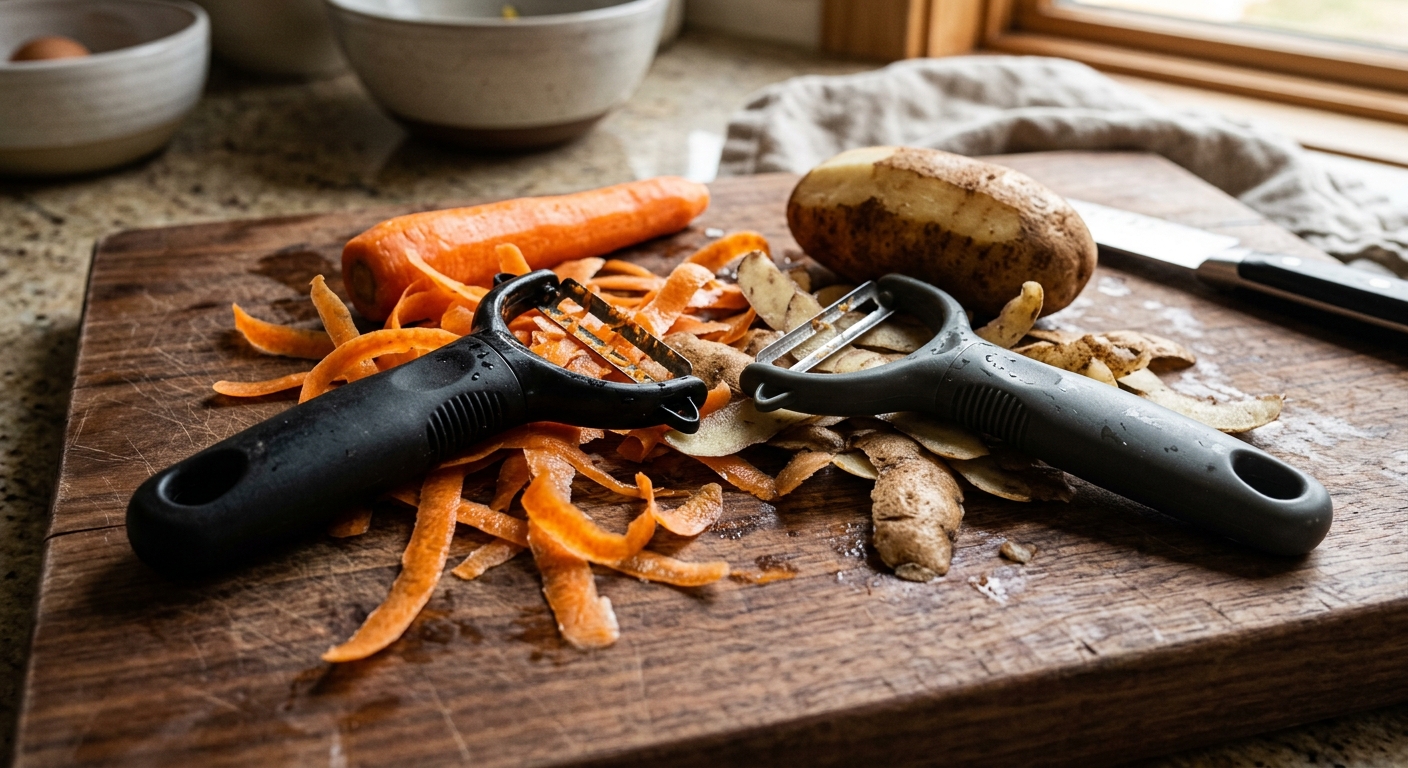
The most reliable prep setup is usually small: one good chef knife, one board that does not slide, a peeler that does not hurt the hand, and a few measuring tools that make repeat cooking easier. Extra gadgets should prove they save time after cleaning is included.
Affiliate-review transparency
For affiliate review, this page is designed to show the reasoning behind the recommendation before any commercial link appears. A reader should be able to understand the buying logic even if every outbound link were removed.
The next editorial pass for a live money page should add named product examples, retailer availability notes, and a short update log. Those details are intentionally separated from this general buying framework so the page does not invent prices or testing that has not been verified.
Retailer checks before buying prep tools
For knives and prep tools, read beyond blade steel and look at weight, handle shape, washing guidance, board stability, and storage. A knife that looks impressive but ships with vague sharpening advice may become worse value than a simpler blade with clear maintenance expectations.
For boards, mandolines, peelers, and scales, the best retailer pages show dimensions, materials, non-slip details, cleaning limits, and spare-part availability. These details matter because prep tools are handled directly and used quickly; small annoyances become safety and comfort problems.
If a product is marketed as a complete prep solution, check whether every included piece would actually be used. Bundled extras can make the price look generous while adding clutter. The better buy is often one reliable tool that solves a repeated task without adding a new cleaning ritual.
Common buying questions
Should I buy the most expensive option?
Not automatically. Spend more only when the extra money buys easier cleaning, better fit, safer handling, longer useful life, or a repeated improvement you will notice weekly.
What should I verify before clicking a retailer link?
Check size, materials, warranty, return policy, replacement parts, delivery restrictions, and the most common negative reviews. The page should make those checks easier, not hide them.
When is waiting the better decision?
Wait if the product duplicates something you already use, creates storage pressure, or solves an occasional task while adding daily cleaning or maintenance.
Commercial buying verdict
A reliable daily chopping board must prioritise edge retention for your knives and ease of sanitisation over aesthetics. While heavy end-grain blocks look impressive on a kitchen island, high-density polyethylene or composite boards offer superior practicality for raw meat prep and dishwasher cleaning. Choose function over form for your primary workhorse.
Best fit by buyer type
Requires a thick, self-healing end-grain wooden board that absorbs impact from heavy chopping and protects expensive carbon steel knife edges.
Benefits from oversized, high-density plastic boards with deep juice grooves to manage large volumes of wet ingredients without spilling onto the worktop.
Needs a slimline, reversible composite board that fits easily into standard dishwasher racks and stores flat against a splashback.
Comparison framework
Check: Whether the surface yields slightly to a fingernail.
Why it matters: Boards harder than your knife steel, such as glass or bamboo, will quickly dull the blade edge.
Check: If the material requires regular mineral oil application.
Why it matters: Un-oiled wood will warp or crack over time, whereas plastic and composite materials are maintenance-free.
Check: The overall mass or the presence of rubberised grips on the corners.
Why it matters: A lightweight board without grips will slide on a wet counter, creating a severe slipping hazard while chopping.
Check: How quickly the surface absorbs standing water.
Why it matters: Highly porous materials trap bacteria from raw meat and retain strong odours from garlic and onions.
Check: The depth of the board profile, ideally over 2.5 centimetres for wood.
Why it matters: Thicker boards resist warping from moisture changes and provide a more ergonomic height for extended prep work.
Shortlist by product type
Best for: Raw meat preparation and frequent dishwasher cycles.
Watch out: Shows deep knife scoring over time which can become difficult to scrub clean manually.
Best for: Protecting high-end Japanese knives and heavy cleaver work.
Watch out: Requires monthly oiling and is extremely heavy to move to the sink for washing.
Best for: Everyday vegetable prep and easy storage in narrow cupboards.
Watch out: Can be slightly harder on knife edges than traditional wood and often lacks juice grooves.
Best for: Quick tasks and funnelling chopped ingredients directly into a pan.
Watch out: Offers zero impact absorption and will warp if exposed to high heat.
Retailer checks before clicking out
- Verify the exact dimensions against your deepest kitchen sink basin to ensure you can actually wash it.
- Check if the manufacturer specifies whether the board is dishwasher safe or strictly hand-wash only.
- Look for confirmation that plastic boards are BPA-free and food-safe certified.
- Read the returns policy regarding warping, as wooden boards can arrive bowed depending on warehouse humidity.
- Confirm if rubber feet or non-slip mats are included or need to be purchased separately.
- Check the delivery weight for thick wooden blocks, as they can exceed standard courier limits and incur extra fees.
Upgrade path
- Start with a basic colour-coded plastic board set to prevent cross-contamination on a budget.
- Upgrade to a durable wood-fibre composite board for better knife feel and dishwasher convenience.
- Invest in a thick end-grain hardwood block for your main prep station, keeping a plastic board solely for raw poultry.
Money-page FAQ
Why shouldn't I use a glass chopping board?
Glass is significantly harder than knife steel. Using a glass board will roll and blunt your knife edges almost immediately, and the slick surface increases the risk of the blade slipping.
How do I stop my plastic board from sliding on the worktop?
Place a damp piece of kitchen towel or a dedicated non-slip silicone mat underneath the board before you start chopping. This creates friction and anchors the board safely.
Can I put a wooden chopping board in the dishwasher?
No. The prolonged exposure to high heat and water will strip the natural oils, causing the wood to swell, warp, and eventually split down the glue lines.
How often should I replace a plastic cutting board?
Replace it when the surface develops deep, cross-hatched grooves that cannot be thoroughly cleaned. These crevices harbour bacteria that standard washing cannot reach.
Final editorial maintenance notes
For a finished commercial page, the final pass should compare at least three real retailer options against this framework and note why each one is included or excluded. That keeps the article useful when product availability changes and prevents the page from sounding like a generic shopping list.
The page should also be revisited after major seasonal sales or manufacturer updates. Cookware coatings, appliance baskets, grinder parts, and kettle internals can change quietly while the product name stays the same, so a maintained guide needs an update habit rather than a one-time verdict.
Reader decision checklist
- Confirm the product fits the hob, cupboard, sink, and cleaning routine.
- Prefer the simpler option when extra features do not change a repeated meal or drink.
- Check retailer availability, warranty terms, and return rules before buying.
- Skip any recommendation that cannot explain who it is wrong for.
Bottom line
The final decision should feel boringly clear: the item fits the task, fits the space, is not miserable to clean, and improves a repeated kitchen habit. If it cannot pass those tests, it probably belongs on a wish list rather than in the basket.
 Guide
GuideMandoline Slicers: Speed, Safety, and Who Should Skip Them
A kitchen guide built around real use: cleaning, space, repeat friction, and what to ignore in marketing copy.
 Review Roundup
Kitchen Scales Worth Buying for Baking and Better Portions
A focused roundup for readers comparing products by daily usability instead of spec-sheet theatre.
 Review Roundup
Peelers That Feel Better When Prep Takes Longer
A focused roundup for readers comparing products by daily usability instead of spec-sheet theatre.