
Best Stainless Steel Pan Sets for Home Cooks Who Want One Good Buy
A practical buying guide focused on fit, maintenance, storage, and the details that decide whether a product keeps earning its place.
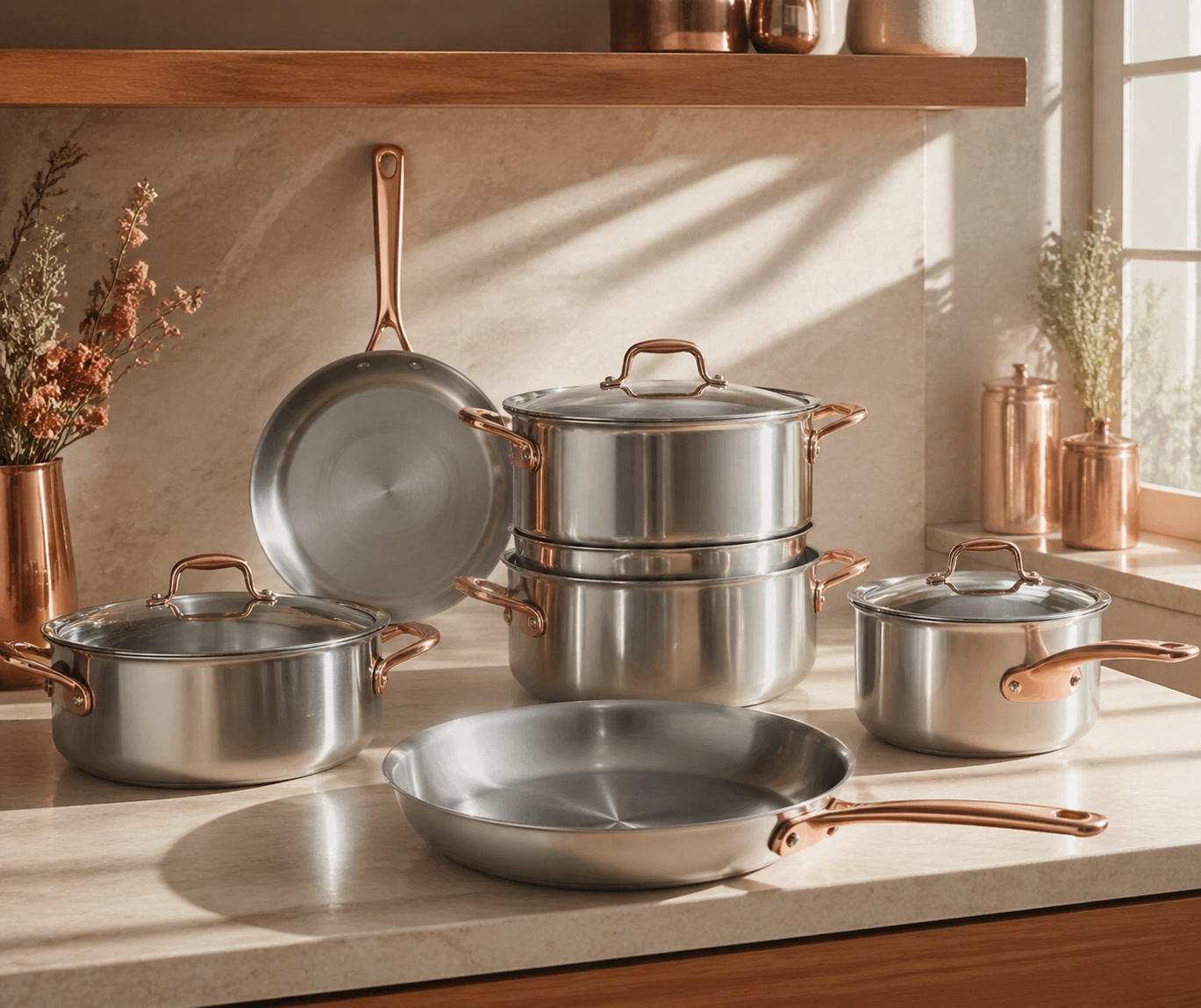
Best Stainless Steel Pan Sets for Home Cooks Who Want One Good Buy is the kind of cookware decision that looks simple until the product is in the kitchen. The difference between a good buy and an annoying one usually shows up in heat control, hob fit, storage, cleaning, weight, lid fit, and whether the piece is pleasant to reach for on a tired weeknight.
This is a buying guide, so the job is not to crown one universal winner. The useful outcome is a shortlist of criteria that helps a reader recognise the right product when they see it. For this page, the useful question is not “what is the most impressive option?” It is “which choice will still make sense after a month of normal use?”
The buying decision
A reader coming to this page is probably trying to avoid buying a large matching set before knowing which pans actually suit the way the kitchen is used. That is the right instinct. Kitchen purchases often go wrong when the decision starts with a product list instead of a use case. Before comparing prices or finishes, it is worth naming the job clearly: what will this item do, how often will it do it, and what will make it irritating to keep using?
For best stainless steel pan sets for home cooks who want one good buy, the practical checks start with materials, construction, handle design, oven safety, induction behaviour, and maintenance demands. These are not glamorous details, but they are the details that decide whether a product becomes part of the routine. A page that ignores them may look neat, but it leaves the reader to discover the expensive parts after buying.
What separates good from merely expensive
The strongest option is rarely the one with the longest feature list. A smaller, plainer, easier-to-clean product can be the better buy if it solves the real task with less friction. This is especially true in UK kitchens where counter space, cupboard depth, and hard-water maintenance can matter as much as headline performance.
The first filter is fit. If the product is too large, too heavy, awkward to clean, or hard to store, it needs to justify those costs with a clear benefit. If it only offers a marginal upgrade over something already in the kitchen, the more disciplined answer may be to skip it.
The second filter is repeatability. A tool that is easy once but annoying every week is not a good daily purchase. Handles, lids, baskets, cords, seals, blades, and removable parts all become more important after the product has been washed ten times.
How to choose without overbuying
The third filter is honesty about habits. A serious baker, a coffee hobbyist, a family cook, and someone cooking in a small rented flat do not need the same answer. The product that looks best in a studio photograph may be wrong for the person who has to clean it after work.
Where possible, compare products by the failure points. Does it wobble? Does it stain? Does it trap food? Does it need a special cleaner? Does it fit the hob, cupboard, sink, or dishwasher? Does it encourage a useful routine or create another object to manage?
This is also where price needs context. Paying more can be sensible when it buys better construction, easier maintenance, safer handling, or longer useful life. Paying more for size, styling, or bundled extras is harder to justify unless those extras match a real pattern of use.
Who should skip this purchase
A good recommendation should also say who should not buy. In this case, skip the purchase if you already own a piece that solves the same job well, or if the new pan creates storage problems without changing how you cook. That advice may reduce clicks, but it makes the page more useful.
Category-specific notes
For cookware, the first practical check is the hob. Gas, induction, ceramic, and oven use all change what construction makes sense. A pan that works beautifully on gas can feel sluggish on induction if the base is wrong, and a piece that is technically oven-safe may still have handles that make it awkward to move safely.
The second check is cleaning tolerance. Stainless steel rewards technique but shows marks. Cast iron holds heat but asks for drying and seasoning. Nonstick is convenient but has a shorter useful life. None of those trade-offs is automatically bad; the mistake is pretending they do not exist.
For a buying page to be useful, it should point readers toward the smallest set of pieces that solve repeated meals: a frying pan or sauté pan, a saucepan that fits the hob, and one larger piece if batch cooking or roasting is common. Everything else should earn its place later.
Affiliate-review transparency
For affiliate review, this page is designed to show the reasoning behind the recommendation before any commercial link appears. A reader should be able to understand the buying logic even if every outbound link were removed.
The next editorial pass for a live money page should add named product examples, retailer availability notes, and a short update log. Those details are intentionally separated from this general buying framework so the page does not invent prices or testing that has not been verified.
Retailer checks before a cookware purchase
Before treating any cookware recommendation as ready to buy, check the exact base diameter, stated induction compatibility, oven-safe temperature, lid inclusion, handle material, and return terms. Product pages often promote the pan diameter while hiding the cooking surface, which is the measurement that affects real portions.
Also check whether replacement lids, handles, or matching pieces can be bought separately. A cookware range that supports open-stock replacement is usually safer than a fashionable set that disappears after one season. This matters for affiliate pages because readers should not be pushed into bundles that become hard to maintain.
If a retailer page uses vague phrases such as premium coating, professional grade, or chef quality without construction details, treat that as a reason to slow down. The better page will say what material is used, how thick the base is, which hobs it supports, and how the warranty handles coating or warping complaints.
Common buying questions
Should I buy the most expensive option?
Not automatically. Spend more only when the extra money buys easier cleaning, better fit, safer handling, longer useful life, or a repeated improvement you will notice weekly.
What should I verify before clicking a retailer link?
Check size, materials, warranty, return policy, replacement parts, delivery restrictions, and the most common negative reviews. The page should make those checks easier, not hide them.
When is waiting the better decision?
Wait if the product duplicates something you already use, creates storage pressure, or solves an occasional task while adding daily cleaning or maintenance.
Commercial buying verdict
A quality stainless steel pan set is a lifetime purchase, provided you choose fully clad construction over disc-bottomed alternatives. While tri-ply is the standard for even heat distribution, five-ply adds unnecessary weight for most domestic hobs. Prioritise comfortable handles and flared rims for pouring. Avoid massive sets; a core trio of a frying pan, saucepan, and sauté pan covers daily cooking.
Best fit by buyer type
Needs large capacities and tight-fitting lids for braising and reducing sauces over long periods.
Requires completely flat bases to maintain contact with the glass hob, preventing buzzing and uneven heating.
Wants a versatile three-piece core set that nests neatly, avoiding redundant milk pans or oversized stockpots.
Comparison framework
Check: Fully clad (base to rim) vs encapsulated base (disc bottom).
Why it matters: Fully clad prevents scorching up the sides of the pan when reducing sauces.
Check: Riveted vs spot-welded.
Why it matters: Rivets are incredibly secure but require careful cleaning around the joints; welded handles offer a smooth interior.
Check: Flared or rolled edges vs straight cut.
Why it matters: Flared rims allow drip-free pouring of liquids and sauces directly from the pan.
Check: Solid stainless steel vs tempered glass.
Why it matters: Steel is oven-safe to higher temperatures and will not shatter, though glass allows you to monitor food.
Check: Aluminium vs copper core.
Why it matters: Aluminium is highly responsive and lighter; copper reacts faster to temperature changes but adds significant weight and cost.
Shortlist by product type
Best for: First-time buyers moving away from non-stick who need the essential frying pan and two saucepans.
Watch out: Often lacks a large sauté pan, which you may need to buy separately.
Best for: Cooks with high-output gas hobs who want maximum heat retention for searing meat.
Watch out: Considerably heavier to lift when full, especially the larger pots.
Best for: Precision cooking where rapid temperature adjustments are critical, such as delicate sauces.
Watch out: The highest price tier, and the exposed copper ring requires polishing to prevent tarnishing.
Best for: Small kitchens or campervans requiring pots with detachable handles or flat lids.
Watch out: Detachable handle mechanisms can degrade over time and may not be oven-safe.
Retailer checks before clicking out
- Verify if the stated piece count includes lids, as a ten-piece set often means five pans and five lids.
- Check the retailer return policy regarding used cookware if you find the handles uncomfortable after one use.
- Confirm the specific grade of stainless steel used for the cooking surface, noting 18/10 is standard for corrosion resistance.
- Look for explicit confirmation of induction compatibility, as some older stainless lines are not magnetic.
- Check the maximum oven-safe temperature, noting that glass lids usually have lower limits than the pans.
- Read the warranty terms to see if warping from thermal shock or dishwasher use voids the guarantee.
Upgrade path
- Good: A basic 18/10 stainless steel set with encapsulated aluminium bases for everyday boiling and basic frying.
- Better: A fully clad tri-ply set featuring an aluminium core that extends up the sides for consistent heat distribution.
- Best: A heavy-gauge, five-ply or copper-core set with ergonomic cast steel handles and flared pouring rims.
Money-page FAQ
Why does food stick to my new stainless steel frying pan?
Food sticks when the pan is either too cold or too hot. You need to preheat the pan properly, add oil, and wait for the food to release naturally once a crust forms.
What causes the rainbow stains on the bottom of the pans?
This is heat tint, caused by a harmless thickening of the chromium oxide layer due to high heat. It can be easily removed with a splash of white vinegar or a specialist stainless steel cleaner.
Are stainless steel pans genuinely dishwasher safe?
While the metal can withstand the dishwasher, harsh detergents can dull the finish over time and degrade exposed aluminium edges. Hand washing is recommended to maintain their appearance.
Do I need to season a stainless steel pan?
No, stainless steel does not require seasoning like cast iron or carbon steel. It is designed to be cooked on directly, though proper temperature control is required to prevent sticking.
Final editorial maintenance notes
For a finished commercial page, the final pass should compare at least three real retailer options against this framework and note why each one is included or excluded. That keeps the article useful when product availability changes and prevents the page from sounding like a generic shopping list.
The page should also be revisited after major seasonal sales or manufacturer updates. Cookware coatings, appliance baskets, grinder parts, and kettle internals can change quietly while the product name stays the same, so a maintained guide needs an update habit rather than a one-time verdict.
Reader decision checklist
- Confirm the product fits the hob, cupboard, sink, and cleaning routine.
- Prefer the simpler option when extra features do not change a repeated meal or drink.
- Check retailer availability, warranty terms, and return rules before buying.
- Skip any recommendation that cannot explain who it is wrong for.
Bottom line
The final decision should feel boringly clear: the item fits the task, fits the space, is not miserable to clean, and improves a repeated kitchen habit. If it cannot pass those tests, it probably belongs on a wish list rather than in the basket.
 Buying Guide
Nonstick Pans That Last Longer Than One Season
A practical buying guide focused on fit, maintenance, storage, and the details that decide whether a product keeps earning its place.
 Comparison Guide
Carbon Steel vs Cast Iron: Which Pan Fits Your Kitchen?
A side-by-side decision guide that separates similar-looking tools by the kitchens and habits they actually suit.
 Starter Guide
The Saucepan Sizes Actually Worth Owning
A first-buy guide for readers who want fewer pieces, fewer regrets, and a clear path into the category.