
Dutch Oven Size Guide for Small and Family Kitchens
A kitchen guide built around real use: cleaning, space, repeat friction, and what to ignore in marketing copy.

Dutch Oven Size Guide for Small and Family Kitchens is the kind of cookware decision that looks simple until the product is in the kitchen. The difference between a good buy and an annoying one usually shows up in heat control, hob fit, storage, cleaning, weight, lid fit, and whether the piece is pleasant to reach for on a tired weeknight.
This guide is written around practical kitchen use, with attention to the awkward details that tend to disappear from product pages. For this page, the useful question is not “what is the most impressive option?” It is “which choice will still make sense after a month of normal use?”
The practical question
A reader coming to this page is probably trying to avoid buying a large matching set before knowing which pans actually suit the way the kitchen is used. That is the right instinct. Kitchen purchases often go wrong when the decision starts with a product list instead of a use case. Before comparing prices or finishes, it is worth naming the job clearly: what will this item do, how often will it do it, and what will make it irritating to keep using?
For dutch oven size guide for small and family kitchens, the practical checks start with materials, construction, handle design, oven safety, induction behaviour, and maintenance demands. These are not glamorous details, but they are the details that decide whether a product becomes part of the routine. A page that ignores them may look neat, but it leaves the reader to discover the expensive parts after buying.
The details to check
The strongest option is rarely the one with the longest feature list. A smaller, plainer, easier-to-clean product can be the better buy if it solves the real task with less friction. This is especially true in UK kitchens where counter space, cupboard depth, and hard-water maintenance can matter as much as headline performance.
The first filter is fit. If the product is too large, too heavy, awkward to clean, or hard to store, it needs to justify those costs with a clear benefit. If it only offers a marginal upgrade over something already in the kitchen, the more disciplined answer may be to skip it.
The second filter is repeatability. A tool that is easy once but annoying every week is not a good daily purchase. Handles, lids, baskets, cords, seals, blades, and removable parts all become more important after the product has been washed ten times.
The sensible buying path
The third filter is honesty about habits. A serious baker, a coffee hobbyist, a family cook, and someone cooking in a small rented flat do not need the same answer. The product that looks best in a studio photograph may be wrong for the person who has to clean it after work.
Where possible, compare products by the failure points. Does it wobble? Does it stain? Does it trap food? Does it need a special cleaner? Does it fit the hob, cupboard, sink, or dishwasher? Does it encourage a useful routine or create another object to manage?
This is also where price needs context. Paying more can be sensible when it buys better construction, easier maintenance, safer handling, or longer useful life. Paying more for size, styling, or bundled extras is harder to justify unless those extras match a real pattern of use.
Who should skip this purchase
A good recommendation should also say who should not buy. In this case, skip the purchase if you already own a piece that solves the same job well, or if the new pan creates storage problems without changing how you cook. That advice may reduce clicks, but it makes the page more useful.
Category-specific notes
For cookware, the first practical check is the hob. Gas, induction, ceramic, and oven use all change what construction makes sense. A pan that works beautifully on gas can feel sluggish on induction if the base is wrong, and a piece that is technically oven-safe may still have handles that make it awkward to move safely.
The second check is cleaning tolerance. Stainless steel rewards technique but shows marks. Cast iron holds heat but asks for drying and seasoning. Nonstick is convenient but has a shorter useful life. None of those trade-offs is automatically bad; the mistake is pretending they do not exist.
For a buying page to be useful, it should point readers toward the smallest set of pieces that solve repeated meals: a frying pan or sauté pan, a saucepan that fits the hob, and one larger piece if batch cooking or roasting is common. Everything else should earn its place later.
Affiliate-review transparency
For affiliate review, this page is designed to show the reasoning behind the recommendation before any commercial link appears. A reader should be able to understand the buying logic even if every outbound link were removed.
The next editorial pass for a live money page should add named product examples, retailer availability notes, and a short update log. Those details are intentionally separated from this general buying framework so the page does not invent prices or testing that has not been verified.
Retailer checks before a cookware purchase
Before treating any cookware recommendation as ready to buy, check the exact base diameter, stated induction compatibility, oven-safe temperature, lid inclusion, handle material, and return terms. Product pages often promote the pan diameter while hiding the cooking surface, which is the measurement that affects real portions.
Also check whether replacement lids, handles, or matching pieces can be bought separately. A cookware range that supports open-stock replacement is usually safer than a fashionable set that disappears after one season. This matters for affiliate pages because readers should not be pushed into bundles that become hard to maintain.
If a retailer page uses vague phrases such as premium coating, professional grade, or chef quality without construction details, treat that as a reason to slow down. The better page will say what material is used, how thick the base is, which hobs it supports, and how the warranty handles coating or warping complaints.
Common buying questions
Should I buy the most expensive option?
Not automatically. Spend more only when the extra money buys easier cleaning, better fit, safer handling, longer useful life, or a repeated improvement you will notice weekly.
What should I verify before clicking a retailer link?
Check size, materials, warranty, return policy, replacement parts, delivery restrictions, and the most common negative reviews. The page should make those checks easier, not hide them.
When is waiting the better decision?
Wait if the product duplicates something you already use, creates storage pressure, or solves an occasional task while adding daily cleaning or maintenance.
Commercial buying verdict
Selecting the right Dutch oven size prevents overcrowding during browning and ensures you are not heating unnecessary cast iron. A 4.5-litre to 5.5-litre pot serves as the standard baseline for most UK households, comfortably handling a whole chicken or batch cooking for four. Only scale up to 7 litres if you routinely cook for six or bake large artisan loaves.
Best fit by buyer type
Requires a 3-litre to 4-litre capacity. Ideal for smaller hobs, baking standard sourdough rounds, and making two generous portions of stew with leftovers, without taking up excessive cupboard space.
Needs the classic 4.5-litre to 5.5-litre range. This size handles standard recipe yields, fits a medium roasting bird, and provides enough surface area for browning meat without trapping steam.
Requires 6.5 litres or more. Essential for bulk meal preparation, large joints of meat, or cooking for six to eight people. Be aware these are exceptionally heavy when full.
Comparison framework
Check: Measure the flat cooking surface, not just the rim.
Why it matters: Determines how much meat you can sear at once before it starts boiling in its own juices.
Check: The stated weight of the pot and lid combined.
Why it matters: A 7-litre cast iron pot can weigh over 7kg before adding food, which may be difficult to lift from a low oven.
Check: Whether the lid is domed or flat, and if it has self-basting spikes.
Why it matters: Domed lids increase the internal volume for tall roasts, while flat lids might restrict capacity.
Check: The size of the side loop handles.
Why it matters: Small handles are difficult to grip securely whilst wearing thick oven gloves, increasing the risk of dropping a heavy, hot pot.
Check: How the base aligns with your largest induction or gas ring.
Why it matters: An oversized pot on a small ring creates cold spots at the edges, leading to uneven cooking.
Shortlist by product type
Best for: Everyday family meals, standard stews, and baking medium loaves.
Watch out: The standard round shape can struggle to accommodate longer cuts of meat like a leg of lamb.
Best for: Roasting whole poultry and long joints of meat.
Watch out: Oval bases do not align perfectly with standard round hob rings, requiring careful heat management.
Best for: Side dishes, small households, and baking smaller boules.
Watch out: Easily boils over if you try to scale up a standard four-person recipe.
Best for: Batch cooking, large families, and entertaining.
Watch out: Extremely heavy to manoeuvre and requires substantial storage space.
Retailer checks before clicking out
- Verify the capacity is listed in litres rather than just quarts, as US conversions can be misleading.
- Check the returns policy regarding heavy items, as return postage for cast iron can be exceptionally high.
- Confirm the knob material; phenolic knobs often have lower maximum oven temperatures than stainless steel alternatives.
- Look for clear dimensions including the handles to ensure the pot will physically fit inside your oven.
- Ensure the enamel type matches your cooking preferences for searing versus monitoring fond.
- Check if the retailer specifies whether the base is fully compatible with induction hobs without scratching the glass.
Upgrade path
- Entry-level 4-litre bare cast iron or basic enamelled pot for learning heat retention and basic stews.
- Premium 5.5-litre enamelled round Dutch oven with a lighter interior for better visibility when browning.
- Adding a supplementary 7-litre oval Dutch oven specifically for large poultry and batch cooking.
Money-page FAQ
Can I use a large Dutch oven for a small recipe?
Yes, but it is not ideal. A shallow layer of liquid in a large pot evaporates too quickly, which can lead to burning and dry meat.
What size Dutch oven is best for baking sourdough?
A 4.5-litre to 5-litre round pot is the standard choice. It provides enough room for oven spring while keeping the steam trapped close to the dough.
How do I measure the capacity of my current pot?
Fill it to the brim with water using a measuring jug. One litre of water equals one kilogram, which also helps you gauge the total weight.
Why are oval Dutch ovens measured differently?
Oval pots are usually measured by their longest dimension rather than diameter. A 29cm oval pot holds roughly the same volume as a 24cm round pot.
Final editorial maintenance notes
For a finished commercial page, the final pass should compare at least three real retailer options against this framework and note why each one is included or excluded. That keeps the article useful when product availability changes and prevents the page from sounding like a generic shopping list.
The page should also be revisited after major seasonal sales or manufacturer updates. Cookware coatings, appliance baskets, grinder parts, and kettle internals can change quietly while the product name stays the same, so a maintained guide needs an update habit rather than a one-time verdict.
Reader decision checklist
- Confirm the product fits the hob, cupboard, sink, and cleaning routine.
- Prefer the simpler option when extra features do not change a repeated meal or drink.
- Check retailer availability, warranty terms, and return rules before buying.
- Skip any recommendation that cannot explain who it is wrong for.
Bottom line
The final decision should feel boringly clear: the item fits the task, fits the space, is not miserable to clean, and improves a repeated kitchen habit. If it cannot pass those tests, it probably belongs on a wish list rather than in the basket.
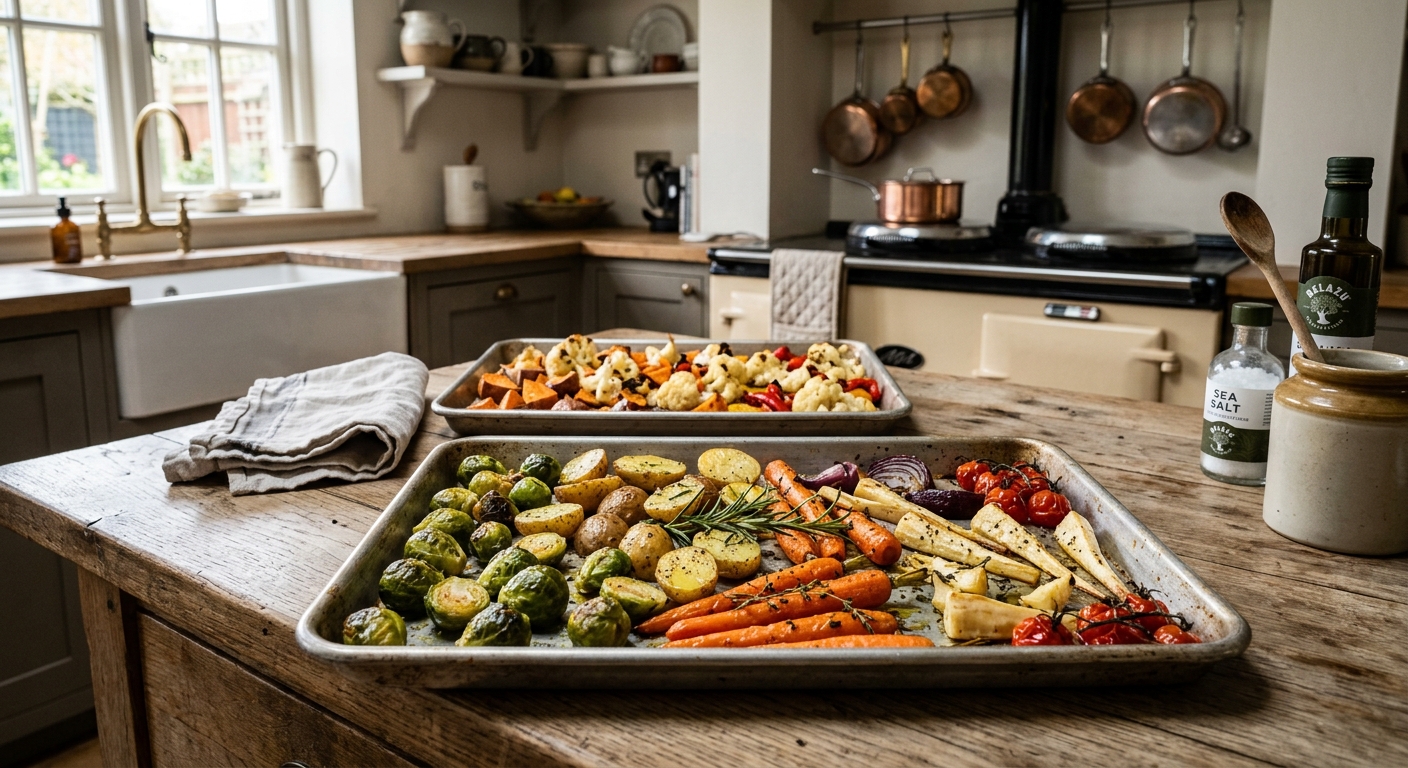 Review Roundup
Sheet Pans That Do Not Warp Under Weeknight Use
A focused roundup for readers comparing products by daily usability instead of spec-sheet theatre.
 Editorial Guide
Ceramic Cookware: The Useful Parts and the Compromises
A measured editorial guide that explains trade-offs without pretending one product type fits every kitchen.
 Starter Guide
If You Buy One Frying Pan First, Make It This Kind
A first-buy guide for readers who want fewer pieces, fewer regrets, and a clear path into the category.