Geekmaxi Countertop Appliance Deals: What Kitchen Buyers Should Check
A retailer-check guide for kitchen buyers comparing appliance deals, delivery terms, warranty notes, and whether a marketplace offer fits a real countertop routine.
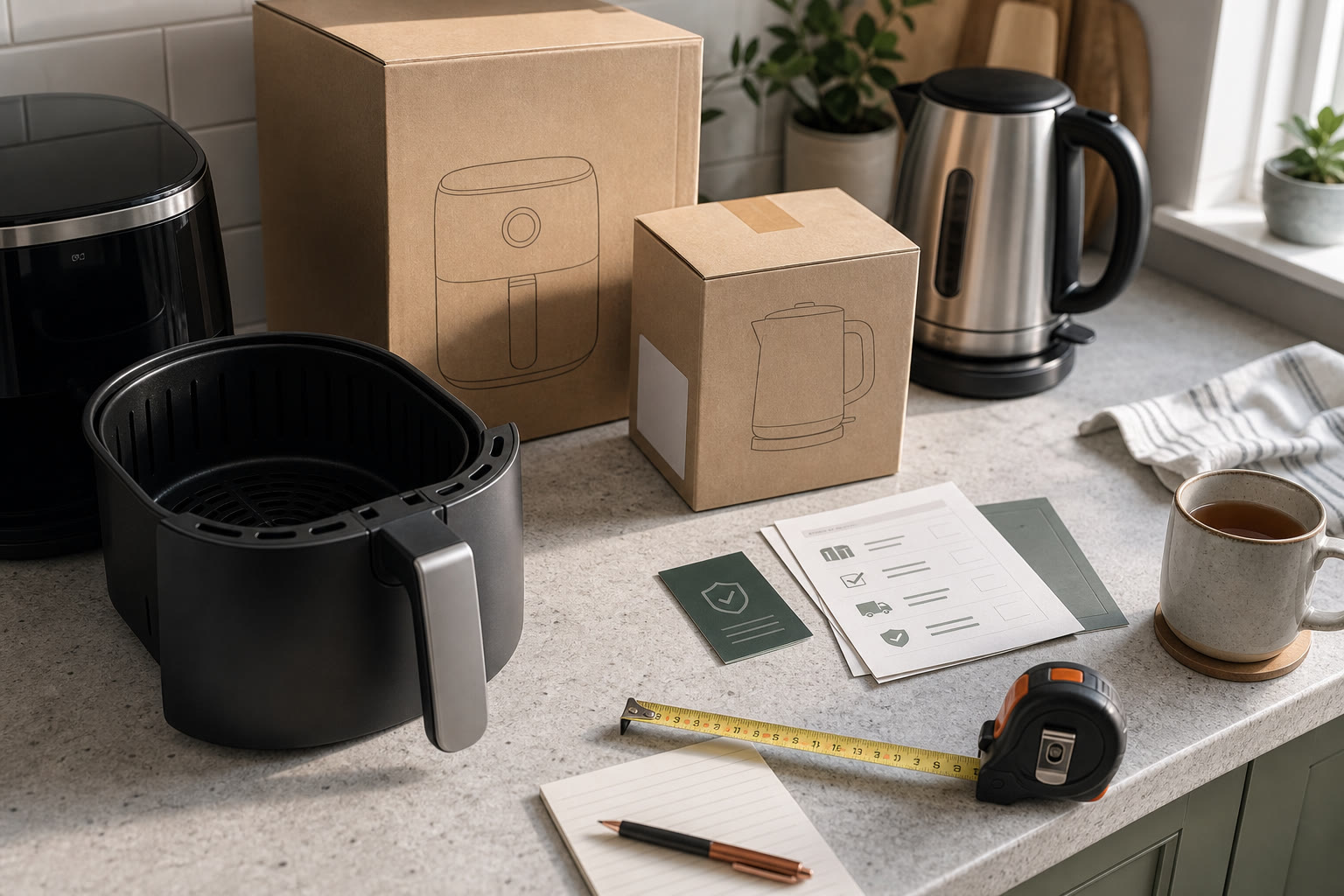
Geekmaxi Countertop Appliance Deals: What Kitchen Buyers Should Check is the kind of small appliances decision that looks simple until the product is in the kitchen. The difference between a good buy and an annoying one usually shows up in counter footprint, cleaning, noise, basket or bowl shape, cable storage, heat, and whether the appliance is annoying enough to live in a cupboard.
This is a retailer-check guide. The goal is to judge whether a deal page gives enough delivery, warranty, appliance-fit, and support information before a reader treats the price as a real saving. For this page, the useful question is not “what is the most impressive option?” It is “which choice will still make sense after a month of normal use?”
Start with the retailer risk
A reader coming to this page is probably trying to avoid buying the largest or most feature-heavy machine before deciding where it will sit and how often it will be washed. That is the right instinct. Kitchen purchases often go wrong when the decision starts with a product list instead of a use case. Before comparing prices or finishes, it is worth naming the job clearly: what will this item do, how often will it do it, and what will make it irritating to keep using?
For geekmaxi countertop appliance deals: what kitchen buyers should check, the practical checks start with capacity, controls, cleaning path, replacement parts, real counter space, and the kind of food or prep it handles best. These are not glamorous details, but they are the details that decide whether a product becomes part of the routine. A page that ignores them may look neat, but it leaves the reader to discover the expensive parts after buying.
Check the appliance before the discount
The strongest option is rarely the one with the longest feature list. A smaller, plainer, easier-to-clean product can be the better buy if it solves the real task with less friction. This is especially true in UK kitchens where counter space, cupboard depth, and hard-water maintenance can matter as much as headline performance.
The first filter is fit. If the product is too large, too heavy, awkward to clean, or hard to store, it needs to justify those costs with a clear benefit. If it only offers a marginal upgrade over something already in the kitchen, the more disciplined answer may be to skip it.
The second filter is repeatability. A tool that is easy once but annoying every week is not a good daily purchase. Handles, lids, baskets, cords, seals, blades, and removable parts all become more important after the product has been washed ten times.
When the deal is worth using
The third filter is honesty about habits. A serious baker, a coffee hobbyist, a family cook, and someone cooking in a small rented flat do not need the same answer. The product that looks best in a studio photograph may be wrong for the person who has to clean it after work.
Where possible, compare products by the failure points. Does it wobble? Does it stain? Does it trap food? Does it need a special cleaner? Does it fit the hob, cupboard, sink, or dishwasher? Does it encourage a useful routine or create another object to manage?
This is also where price needs context. Paying more can be sensible when it buys better construction, easier maintenance, safer handling, or longer useful life. Paying more for size, styling, or bundled extras is harder to justify unless those extras match a real pattern of use.
Who should skip this purchase
A good recommendation should also say who should not buy. In this case, skip the purchase if the appliance solves a once-a-month task while taking space from something used every day. That advice may reduce clicks, but it makes the page more useful.
Category-specific notes
For small appliances, the hidden cost is counter space. A machine that performs well but has to be dragged from a high cupboard will be used less than a slightly less powerful appliance that stays accessible and cleans quickly.
Noise, heat, cable storage, removable parts, and dishwasher-safe pieces can matter as much as wattage. These are the details people notice once the product becomes part of a weekday routine rather than a new purchase.
A good appliance guide should name the job clearly. Air fryers, toaster ovens, food processors, mixers, and rice cookers solve different problems. Buying the wrong one usually happens when the reader starts with popularity instead of meals they actually make.
Affiliate-review transparency
For affiliate review, this page is designed to show the reasoning behind the recommendation before any commercial link appears. A reader should be able to understand the buying logic even if every outbound link were removed.
The next editorial pass for a live money page should add named product examples, retailer availability notes, and a short update log. Those details are intentionally separated from this general buying framework so the page does not invent prices or testing that has not been verified.
Geekmaxi deal check
This article may earn TheKitchenGeeks a commission if you visit the retailer through this link and later make a qualifying purchase. The link is included after the buying checks so readers can judge delivery, warranty, voltage or plug suitability, returns, and product fit before leaving the site.
Visit Geekmaxi through our partner linkRetailer checks before buying appliances
For small appliances, the first retailer check is not wattage; it is footprint. Look for external dimensions, basket or bowl capacity, cable length, removable part list, dishwasher guidance, and whether replacement baskets, seals, blades, or jugs are available.
Noise and cleaning often decide whether an appliance is used after the first week. A product with impressive functions but awkward parts can become a cupboard object. Good product pages show the pieces that detach and explain what can safely go in the dishwasher.
Before linking to any appliance, verify voltage/plug suitability for the target market, warranty length, return policy, and whether customer complaints cluster around the same failure point. A money page should not hide these friction points simply because the product photographs well.
Common buying questions
Should I buy the most expensive option?
Not automatically. Spend more only when the extra money buys easier cleaning, better fit, safer handling, longer useful life, or a repeated improvement you will notice weekly.
What should I verify before clicking a retailer link?
Check size, materials, warranty, return policy, replacement parts, delivery restrictions, and the most common negative reviews. The page should make those checks easier, not hide them.
When is waiting the better decision?
Wait if the product duplicates something you already use, creates storage pressure, or solves an occasional task while adding daily cleaning or maintenance.
Commercial buying verdict
Geekmaxi is best treated as a deal-check retailer for countertop appliances and adjacent smart-home products, not as a specialist kitchen test lab. The sensible use case is comparing prices on air fryers, compact cooking machines, rice cookers, coffee gear, cleaning appliances, and small home tech after you already know the specification you need. Do not buy only because the discount looks large. Check voltage and plug suitability, warehouse location, delivery time, return terms, warranty handling, spare parts, and whether the appliance footprint actually fits your counter.
Best fit by buyer type
Already knows the appliance type and wants to compare a lower price against delivery, warranty, and return friction before buying.
Needs compact appliances that solve a repeated task without occupying the counter permanently or creating awkward storage.
Buys kitchen and home devices together, but still needs to separate useful kitchen tools from unrelated gadgets.
Comparison framework
Check: Whether the item ships from a local, EU, UK, or overseas warehouse, and whether delivery estimates are realistic.
Why it matters: A lower product price can lose its appeal if delivery is slow, returns are difficult, or customs and support questions are unclear.
Check: Voltage, plug type, adaptor requirements, and whether the appliance is intended for your market.
Why it matters: Kitchen appliances draw meaningful power. A plug mismatch or unclear voltage listing is a harder risk than it would be for a small accessory.
Check: External dimensions, cable length, lid clearance, basket pull-out space, and whether the appliance can be stored easily.
Why it matters: A deal is not useful if the machine has to live on the floor of a cupboard and becomes too annoying to use.
Check: Removable baskets, dishwasher-safe parts, seals, filters, blades, and whether food can trap in hinges or vents.
Why it matters: Most countertop appliances fail the daily-use test through cleaning friction rather than headline performance.
Check: Return window, who pays return shipping, warranty contact path, repair process, and what happens to used appliances.
Why it matters: Marketplace-style purchases can be perfectly fine, but support details should be clear before money leaves your account.
Shortlist by product type
Best for: Readers who already know their capacity needs and want a lower price on a countertop cooking appliance.
Watch out: Basket size, external footprint, replacement baskets, and whether the product page shows the parts that need washing.
Best for: Weeknight cooks who want repeatable rice, grains, or batch sides without watching a pan.
Watch out: Inner-pot coating, spare inner pots, steam vent cleaning, and market-specific plug details.
Best for: Buyers looking for electric kettles, grinders, frothers, or compact morning-routine tools.
Watch out: Hard-water cleaning access, replacement filters, grind adjustment, and whether the warranty covers daily use.
Best for: Kitchen-adjacent cleanup where crumbs, hard floors, and pet hair are part of daily maintenance.
Watch out: Replacement brushes, filters, mapping support, battery warranty, app region, and whether the machine handles kitchen thresholds.
Retailer checks before clicking out
- Confirm the appliance ships from a warehouse that makes sense for your delivery expectations and return path.
- Check voltage, plug type, and market compatibility before buying any heated or motorised appliance.
- Measure the counter, cupboard, lid clearance, and pull-out space rather than relying on product photos.
- Look for clear warranty handling and return language, especially for opened or used kitchen appliances.
- Check whether replacement baskets, filters, seals, blades, jugs, or inner pots can be bought later.
- Compare the final checkout price against at least one known retailer, including delivery cost and support risk.
Upgrade path
- First: Use Geekmaxi as a price comparison point after choosing the exact appliance type and capacity you need.
- Next: Shortlist only products with clear dimensions, plug/voltage details, warranty terms, and cleaning information.
- Final: Buy through the deal link only when the saving is still worthwhile after delivery, returns, and support risk are visible.
Money-page FAQ
Is Geekmaxi a good fit for kitchen appliance shopping?
It can be useful for deal checking, especially for countertop appliances and smart-home-adjacent products. It should not replace basic kitchen buying checks such as footprint, cleaning, warranty, and market compatibility.
What should I check before buying a heated appliance?
Check voltage, plug type, safety certifications shown on the product page, warehouse location, warranty support, and whether the appliance is intended for your market.
Should I click through if the discount looks high?
Only after comparing the final checkout price, delivery time, return path, and warranty handling. A large headline discount is not enough evidence on its own.
What is the safest Geekmaxi use case for TheKitchenGeeks readers?
Use it after reading a buying guide and narrowing your requirements. Then compare whether Geekmaxi has a suitable model at a price that still makes sense after delivery and support checks.
Final editorial maintenance notes
For a finished commercial page, the final pass should compare at least three real retailer options against this framework and note why each one is included or excluded. That keeps the article useful when product availability changes and prevents the page from sounding like a generic shopping list.
The page should also be revisited after major seasonal sales or manufacturer updates. Cookware coatings, appliance baskets, grinder parts, and kettle internals can change quietly while the product name stays the same, so a maintained guide needs an update habit rather than a one-time verdict.
Reader decision checklist
- Confirm the product fits the hob, cupboard, sink, and cleaning routine.
- Prefer the simpler option when extra features do not change a repeated meal or drink.
- Check retailer availability, warranty terms, and return rules before buying.
- Skip any recommendation that cannot explain who it is wrong for.
Bottom line
The final decision should feel boringly clear: the item fits the task, fits the space, is not miserable to clean, and improves a repeated kitchen habit. If it cannot pass those tests, it probably belongs on a wish list rather than in the basket.
 Guide
GuideQuiet Kitchen Appliances for Flats and Early Mornings
A kitchen guide built around real use: cleaning, space, repeat friction, and what to ignore in marketing copy.
 Kitchen Note
The Food Processor Cleaning Test Most Reviews Avoid
A shorter field note on the small practical details that usually get missed in product pages.
 Comparison Guide
Hand Mixer vs Stand Mixer for Occasional Bakers
A side-by-side decision guide that separates similar-looking tools by the kitchens and habits they actually suit.